Did you know that cataracts are not actually a disease?
The lens inside the eye is made of proteins contained within an extremely thin, clear membrane called the capsule. These proteins are arranged in a precise way that allows light to pass through and focus properly, rather than being blocked.
As we age, the lens ages as well. One of the earliest signs of this process is the need for reading glasses, which commonly develops in our 40s and 50s. Over time, the same changes in the lens proteins that cause the lens to become more rigid also cause it to become cloudy. This cloudiness is what we call a cataract.
Because cataracts involve an actual clouding of the lens, glasses and contact lenses become less effective as the condition progresses. Glasses and contacts can only refocus light; they cannot remove the cloudiness that blocks it.
A helpful comparison is to think of the eye as a camera. Updating your glasses prescription is like adjusting a camera lens to bring an image into focus. However, if you were to smear grease or ointment on the camera lens, no amount of focusing would restore a clear image. Cataracts similarly affect vision. As a result, many people discover they have cataracts when their eye doctor finds that stronger glasses or contacts can no longer improve their vision.
Unfortunately, unlike a camera lens, the natural lens inside the eye cannot simply be cleaned. The only way to restore maximum clarity is to remove the cloudy lens altogether. That is exactly what cataract surgery accomplishes.
During cataract surgery, the natural lens is removed from the capsular bag that has held it throughout your life. A new artificial lens, called an intraocular lens (IOL), is then placed inside that same capsule. This replacement lens must be carefully selected to match the unique characteristics of your eye, which is why specialized measurements are taken before surgery.
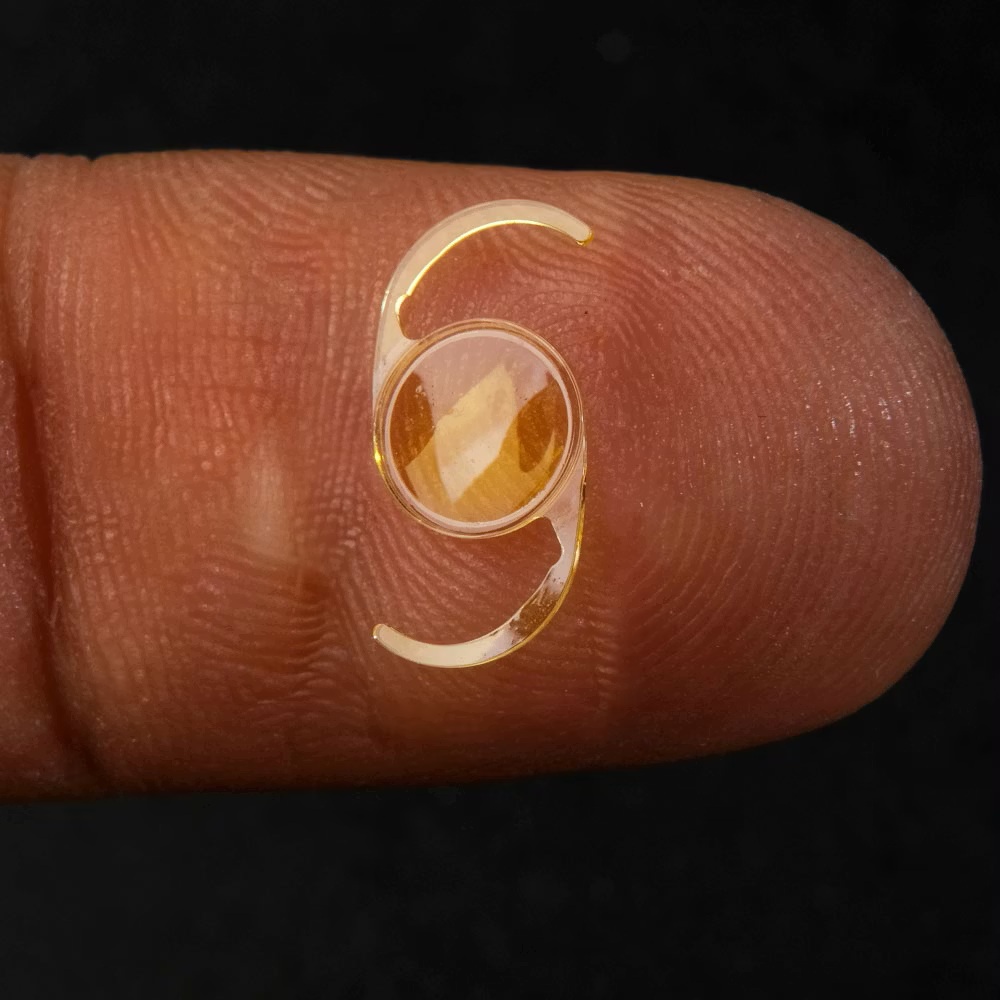 Fortunately, modern artificial lenses are made from highly advanced materials with exceptional optical quality. Unlike the natural lens, they do not become cloudy over time. Because the original lens has been removed and cannot regrow, the cataract itself cannot return.
Some patients may later develop a thin film on the back surface of the capsule that holds the lens. This condition, often called a secondary cataract or posterior capsule opacification, is not a recurrence of the cataract and does not involve the artificial lens. It can typically be treated quickly and painlessly with a brief in-office laser procedure.
Remarkably, modern artificial lenses can be implanted safely, provide long-lasting vision improvement, and carry virtually no risk of rejection by the body. This is why cataract surgery has become one of the most commonly performed and successful surgical procedures in the world.
For many patients, the result is a dramatic improvement in vision and a renewed sense of clarity that lasts for years to come.
Cornea Associates of Texas provides superior eye care from offices in Plano, Fort Worth, and Dallas, TX. Our doctors perform many surgical procedures, including LASIK surgery, PRK surgery, EVO ICL and cataract surgery. Our doctors are affiliated with several prestigious organizations, including:
To schedule a consultation with our team, please fill out our online form or call (214) 692-0146. For Lasik Consultation's call (214) 696-5900.
Locations
We have 4 locations the greater Dallas-Fort Worth area